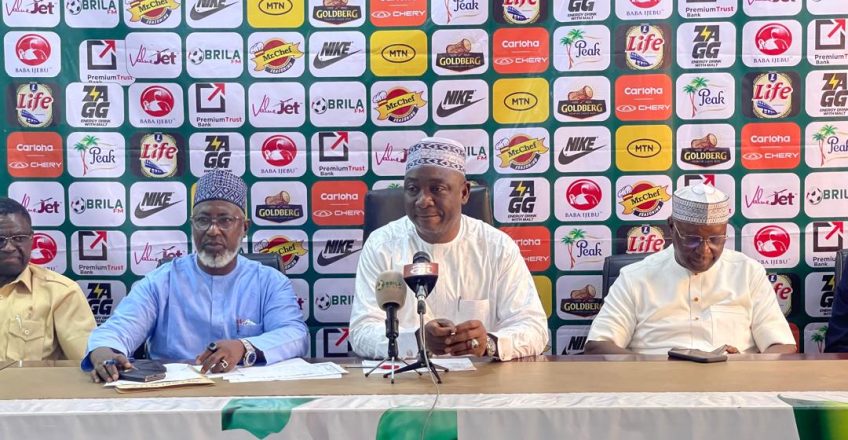
The NFF election should have taken place on Sunday, September 27, in Lafia, Nasarawa State, but no ballot was cast because FIFA and CAF have frozen the process while they decide how Nigerian football will be run after the August resignation of the entire federation board. More than a week after a joint FIFA-CAF assessment mission left Abuja, the world body has not yet announced whether it will impose a normalisation committee on the Nigeria Football Federation.
Lafia was only confirmed as the venue in late July, when the NFF moved the elective congress back by a day so candidates attending Nigeria’s AFCON 2027 qualifier against Madagascar in Uyo could get there in time. The Super Eagles won that match 2-1 on Friday and are now in Bissau for Tuesday’s qualifier, while the federation that sends them out has no elected board.
| Board resigns | 27 August 2026 |
|---|---|
| FIFA halts election process | Letter dated 7 September 2026 |
| FIFA-CAF mission in Abuja | Mid-September 2026, four days |
| Scheduled elective congress | 27 September 2026, Lafia (not held) |
| Secretariat run by | Dr Emmanuel Ikpeme, acting |
| Next step | Awaiting FIFA decision on a normalisation committee |
How the NFF election went from scheduled to suspended in six weeks
President Ibrahim Musa Gusau, General Secretary Mohammed Sanusi and members of the Executive Committee resigned on August 27, following the Super Eagles’ failure to reach the 2026 World Cup and the Super Falcons missing out on the 2027 Women’s World Cup. The National Sports Commission then named Dr Emmanuel Ikpeme, the deputy general secretary, to oversee the NFF secretariat, and the federation said the September 27 congress was postponed while reforms were worked out with FIFA and CAF. The NFF described the arrangement as “intended to ensure continuity in the administration of Nigerian football during the transition”.
FIFA accepted the resignations at a meeting in Zurich attended by NSC chairman Shehu Dikko, NSC Director General Bukola Olopade, Ikpeme and former NFF president Amaju Pinnick, who was there as a CAF adviser. A week later, in a letter dated September 7 and addressed to Ikpeme, FIFA’s Chief Member Associations Officer Elkhan Mammadov told the NFF to “suspend its ongoing electoral process and halt all further steps or decisions connected to the elections until further notice”. That letter ended any hope of a vote in Lafia this weekend, and SportCabal reported at the time that FIFA was planning an Abuja visit.
What the FIFA-CAF mission heard in Abuja
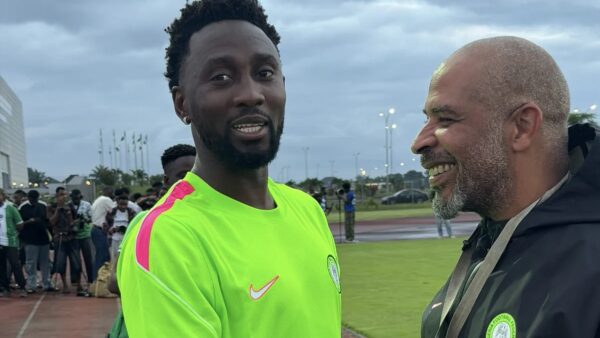
The joint delegation spent four days in Abuja in mid-September meeting the NFF administration, the electoral committee, state football association representatives, league bodies, players, coaches, referees, clubs, sponsors and supporters, before a closing session at the NSC headquarters. The mission has since returned to report to FIFA, and no decision has been made public.
Those stakeholders did not all ask for the same outcome, with the NSC favouring an independent normalisation committee while state FA chairmen, who dominate the NFF Congress, have reportedly argued for their own interim committee instead and rejected normalisation as a first option. Relations between the two sides were already strained earlier this month over Ikpeme’s reported move to dissolve the Congress, which the chairmen wanted withdrawn before talks could go on.
Why a normalisation committee would change who controls the next NFF election
Dikko said in early September that FIFA had “endorsed the resignation, endorsed reform, agreed that the reform must happen, but it has to go through the proper process”. Under the model he described, FIFA rather than the Federal Government would appoint the committee, set its terms of reference and fund its work, with members barred from contesting the next NFF election. He put its likely tenure at six months to a year, depending on how much of the statutes and electoral code has to be rewritten before a fresh vote.
For the state FA chairmen, that is the central issue, because the electoral code is where their voting power sits. If FIFA installs a normalisation committee with a brief to rewrite the code, the next congress could look very different from the one that was supposed to sit in Lafia today.
What the delay means for the Super Eagles and domestic football
The national teams have kept playing through the crisis, with Eric Chelle’s side beating Madagascar in Uyo and the Flamingos winning the WAFU-B U17 Girls Cup this weekend, while the secretariat keeps the fixtures going without an elected board. Longer-term decisions, though, including coaching contracts, sponsorship deals and the running of the leagues, will be difficult to settle while the structure above the secretariat is undecided, and the security agencies’ probe into the federation is still hanging over it.
Attention now turns to Zurich, where FIFA’s decision on the mission’s report will decide whether Nigeria gets a normalisation committee, an interim board chosen by Congress, or something between the two. Whenever that ruling comes, the Super Eagles face Group L leaders Guinea-Bissau on Tuesday with only an acting secretariat behind them.